Chattanooga presents distinct vector challenges due to subtropical humidity along the Tennessee River basin, dense forest canopies near Lookout Mountain, and runoff accumulation across shaded foothill ravines. In…
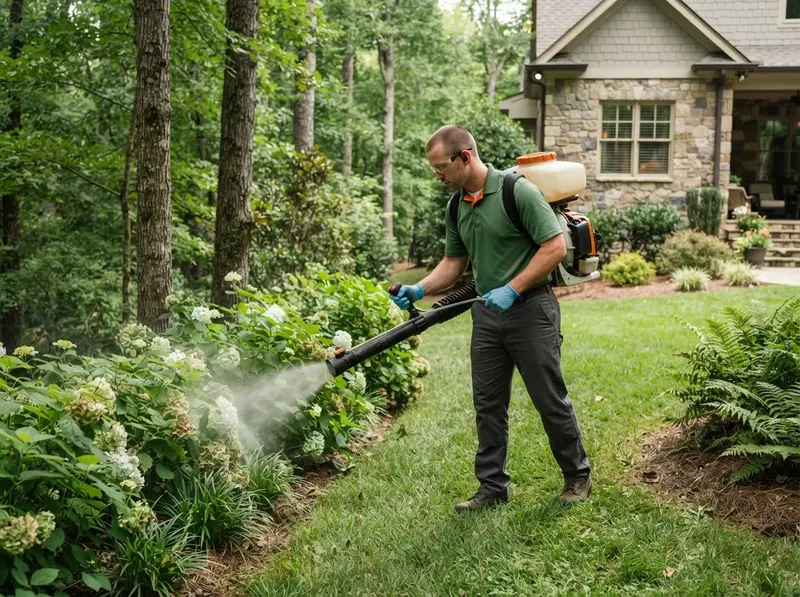
Chattanooga presents distinct vector challenges due to subtropical humidity along the Tennessee River basin, dense forest canopies near Lookout Mountain, and runoff accumulation across shaded foothill ravines. In established valleys such as St. Elmo and Lookout Valley, heavy seasonal rainfall feeds woodland hollows where container-breeding insects reproduce rapidly. Conventional broad-scale chemical fogging frequently drifts past target zones, impacting unintended areas while failing to contact resting larvae beneath dense undergrowth. WestHaven Pest Services implements an integrated approach targeting specific harborage points rather than indiscriminately coating open turf grass. Field operators identify shade-heavy perimeter borders, ivy clusters, and beneath-deck spaces common in older architecture throughout Highland Park and the Southside Historic District, concentrating intervention directly where adult insects shelter during the hottest hours of the day.
Controlling active infestations requires disrupting the reproductive cycle at the larval stage before adult emergence occurs. Stagnant drainage features around residential creek spurs in Brainerd and low-lying storm basins across Red Bank offer fertile grounds for insect nurseries. Operators apply micro-encapsulated biological controls containing Bacillus thuringiensis israelensis directly into standing retention areas, as established by the US Environmental Protection Agency. These microbial proteins act exclusively inside the alkaline gut of larval diptera, neutralising maturing broods without leaching harmful compounds into groundwater tables or disturbing sensitive decorative ornamental plants. Routine drainage maintenance guidance aligned with recommendations from the Centers for Disease Control and Prevention helps eliminate unseen water reservoirs, including blocked gutter runs, neglected birdbaths, and exterior plant drip trays.
Property size and foliage density determine the precise scope of mechanical management. A standard quarter-acre lot along North Shore or Riverview features structured garden plots and ornamental shrubs that require backpack mist blowers delivering calibrated droplet diameters of 50 to 100 microns. This precise droplet size guarantees uniform adherence beneath broadleaf foliage while minimizing off-target vapor drift. Larger perimeter acreages bordering wooded elevations in Hixson or drainage slopes near East Ridge require systematic boundary barriers. According to vector management directives supported by the American Mosquito Control Association, source reduction combined with targeted adulticide residual application delivers sustainable population decreases while preserving vital pollinator species such as bees and butterflies that forage on blooming garden flora.
Environmental stewardship remains an essential standard across all exterior interventions. Chemical applications conform strictly to commercial applicator safety measures established by the EPA Worker Protection Standard and surface water management guidelines managed by the Tennessee Department of Environment and Conservation. When managing waterfront-adjacent properties situated near the Chickamauga Dam or along the lower Tennessee River, specialized applications avoid direct contamination of active waterways in accordance with clean water standards administered by the US Geological Survey. Operational protocols also consult pest biology guidelines distributed through the University of Tennessee Department of Entomology and Plant Pathology, regional conservation frameworks outlined by the Tennessee Wildlife Resources Agency, federal pollinator protection policies enforced by the US Department of Agriculture, and chemical formulation standards certified by the National Pesticide Information Center. Property owners can schedule direct inspections by calling (803) 887-7497 to arrange non-subscription exterior remediation.
Every job gets a firm, written price after a free on-site visit.
Tell us about your targeted mosquito control job in Chattanooga and we'll send a clear, written quote, usually the same day.
 WestHaven Pest Services